Category: Blogs

  • The Ultimate Leg Strengthening Workout Finisher (Not for Beginners)

    Leg day has a reputation. It’s the workout most people respect—and secretly fear. Heavy squats, lunges, and deadlifts push your lower body to its limits. But if you want truly powerful legs, the real magic happens after the main workout. That’s where workout finishers step in.

    At Tonabolic, advanced finishers are designed to squeeze every ounce of strength from your muscles. Think of them as the final round in a boxing match—when your muscles are already tired and you still push harder. This Leg Strengthening Finisher combines two brutally effective unilateral exercises: Single Leg Hip Thrusters and a Bulgarian Split Squat paired with a Single Leg Rigid Deadlift.

    It’s not designed for beginners. It’s designed for athletes, serious lifters, and people who want stronger, more stable, and more explosive legs.

    The structure is simple but intense:

    • 40 seconds of work
    • 10 seconds to switch exercises
    • Perform the sequence on one leg, then switch to the other.

    Intermediate athletes complete one set, while advanced athletes push through two sets.

    By the end of this routine, your quads, hamstrings, glutes, calves, and hip stabilizers will be burning like never before. That’s the signal your muscles are adapting and growing stronger.

    Let’s break down why this workout is so effective.


    Why Advanced Leg Finishers Are Essential for Strength Training

    What Makes a Workout Finisher So Effective

    A workout finisher is designed to push muscles beyond their comfort zone. After your primary lifts, your muscles are already fatigued. Adding a high-intensity finisher forces your body to recruit additional muscle fibers that might not normally activate.

    This method increases muscle endurance, metabolic stress, and neuromuscular coordination. Those three factors play a huge role in developing stronger and more resilient legs.

    Research shows that unilateral movements such as split squats and single-leg exercises can significantly improve balance and muscle activation. These exercises isolate each leg individually, which means weaker muscles cannot hide behind stronger ones.

    When your legs are trained individually, your body adapts by improving:

    • Stability
    • Core engagement
    • Athletic performance
    • Strength symmetry

    This is why elite athletes incorporate unilateral movements into their training routines.

    Why This Routine Is Not for Beginners

    This finisher looks simple on paper. Two exercises. Short intervals. Switch legs.

    But once you start performing it with proper form, the intensity skyrockets.

    Both exercises require balance, coordination, and strong core stability. Beginners often struggle with maintaining alignment in unilateral movements. Without proper control, the risk of injury increases.

    This routine demands:

    • Strong hip stability
    • Solid core engagement
    • Good mobility
    • Proper movement mechanics

    That’s why Tonabolic labels it clearly: Not for beginners.

    It’s best suited for individuals who already have a foundation of strength training and are comfortable performing compound leg exercises.


    Overview of the Tonabolic Leg Strengthening Finisher

    The Superset Structure Explained

    Supersets are one of the most powerful training methods in fitness. Instead of resting between exercises, you transition directly into another movement.

    This workout pairs:

    1. Single Leg Hip Thrusters
    2. Bulgarian Split Squat with Single Leg Rigid Deadlift

    The goal is to create continuous tension on the lower body.

    Hip thrusts focus on glute activation, while Bulgarian split squats recruit the quads, hamstrings, and stabilizing muscles. When combined with a single-leg deadlift motion, the posterior chain gets even more activation.

    This means multiple muscle groups work simultaneously.

    The result? A full-spectrum lower body workout packed into a short and intense finisher.

    Workout Timing and Intensity

    Timing plays a critical role in this routine.

    Structure:

    PhaseDuration
    Exercise Work40seconds
    Transition10 seconds
    Sets (Intermediate)1
    Sets (Advanced)2

    The short rest keeps your heart rate elevated, turning this strength finisher into a mini conditioning workout.

    You’re not just building muscle—you’re improving endurance and mental toughness.


    Exercise 1 – Single Leg Hip Thrusters

    The Single Leg Hip Thruster is one of the best exercises for isolating the glutes.

    Unlike traditional hip thrusts, using one leg forces your body to stabilize and recruit additional muscles.

    Muscles Worked in Single Leg Hip Thrusters

    This movement primarily targets:

    • Glutes
    • Hamstrings
    • Hip flexors
    • Core stabilizers

    When performed correctly, it also activates pelvic stabilizers that are often ignored in typical leg workouts.

    Strong glutes are essential for everything from sprinting to lifting heavy weights.

    Step-by-Step Technique for Perfect Form

    Performing the movement correctly ensures maximum results.

    Execution steps:

    1. Sit with your upper back against a bench.
    2. Place one foot firmly on the ground.
    3. Cross the other leg over the knee.
    4. Drive through your heel.
    5. Raise your hips until your body forms a straight line.
    6. Slowly lower back down.

    The focus should always be on controlled movement and glute contraction.

    If you feel it mostly in your lower back, your form likely needs correction.


    Exercise 2 – Bulgarian Split Squat + Single Leg Rigid Deadlift

    Few exercises challenge the legs as much as the Bulgarian Split Squat.

    This single-leg movement activates the glutes, quadriceps, and hamstrings while simultaneously challenging balance and stability.

    Why Bulgarian Split Squats Are Powerful

    Bulgarian split squats are known for their ability to isolate each leg individually. This helps correct strength imbalances and improves overall athletic performance.

    They also provide a deeper range of motion compared to traditional squats, which increases muscle activation.

    Benefits include:

    • Increased leg strength
    • Improved balance
    • Enhanced hip mobility
    • Reduced lower back stress

    Athletes in sports like running, soccer, and basketball often rely on this exercise to develop explosive power.

    Combining It With a Single Leg Deadlift

    Adding a Single Leg Rigid Deadlift transforms the movement into a powerful posterior chain exercise.

    This combination targets:

    • Glutes
    • Hamstrings
    • Lower back stabilizers
    • Core muscles

    The deadlift motion introduces a hip hinge pattern, balancing the squat-based movement.

    Your body must stabilize throughout the motion, which dramatically increases muscle recruitment.


    Why Unilateral Exercises Build Stronger Legs

    Balance, Stability, and Pelvic Control

    Most everyday movements occur on one leg.

    Walking, running, jumping—all involve single-leg mechanics.

    Unilateral exercises train the body to maintain balance and stability, which improves overall performance.

    This workout also strengthens pelvic stabilizers, which are essential for proper posture and injury prevention.

    Correcting Muscle Imbalances

    Nearly everyone has a stronger leg.

    Over time, this imbalance can lead to:

    • Poor movement patterns
    • Reduced athletic performance
    • Increased injury risk

    Single-leg exercises force each limb to work independently, correcting these discrepancies.


    Muscle Groups Activated in This Finisher

    Quads, Hamstrings, and Glutes

    This finisher primarily targets the posterior and anterior lower body chain.

    Key muscles involved:

    • Quadriceps
    • Hamstrings
    • Gluteus maximus
    • Gluteus medius

    These muscles are responsible for producing power during movements like sprinting, jumping, and lifting.

    Core, Calves, and Hip Flexors

    Secondary muscles also work intensely.

    These include:

    • Calves
    • Hip flexors
    • Abdominals
    • Lower back stabilizers

    The combination ensures a complete lower body burn.


    Workout Programming for Intermediate and Advanced Athletes

    Intermediate Level Structure

    If you’re at an intermediate level, keep the intensity manageable.

    Perform:

    • 1 set
    • Work each exercise for 40 seconds
    • Rest 10 seconds to transition

    Focus on maintaining perfect form.

    Advanced Level Structure

    Advanced athletes should increase volume.

    Recommended structure:

    • 2 sets
    • Minimal rest between exercises
    • Maintain high intensity

    This level pushes both muscle endurance and cardiovascular capacity.


    Tips to Maximize Results from This Leg Finisher

    To get the most out of this routine:

    • Focus on slow and controlled reps
    • Maintain core engagement
    • Avoid rushing through movements
    • Prioritize balance and stability

    Small adjustments in technique can dramatically increase muscle activation.


    Conclusion

    Leg workouts are never easy, but the right finisher can take your training to a completely new level.

    The Tonabolic Leg Strengthening Finisher combines some of the most effective unilateral exercises in strength training. By pairing Single Leg Hip Thrusters with Bulgarian Split Squats and Single Leg Deadlifts, the workout challenges your muscles from multiple angles.

    This routine improves strength, balance, stability, and muscular endurance all at once.

    The best part? It doesn’t require complex equipment or a long training session.

    Just a few minutes of focused effort can transform your leg day into a powerful strength-building experience.

    If you’re ready for a serious challenge, add this finisher to your next workout and experience the burn that builds stronger legs.


    FAQs

    1. Is this workout suitable for beginners?

    No. This routine requires strong balance and control. Beginners should first build strength with basic squats, lunges, and hip bridges before attempting this finisher.

    2. How often should I do this leg finisher?

    Two times per week is ideal. Performing it after your regular leg workout will deliver the best results.

    3. Can this workout help with muscle imbalances?

    Yes. Because it uses single-leg movements, each leg works independently, helping correct strength imbalances.

    4. Do I need equipment for this workout?

    Minimal equipment is needed. A bench or elevated surface is enough for hip thrusts and Bulgarian split squats.

    5. Will this workout help with fat loss?

    Yes. High-intensity finishers increase heart rate and calorie burn, which can contribute to fat loss when combined with proper nutrition and training.

  • From 57.5 Kg to 100 Kg Hip Thrust: The Smart Strength Blueprint by Tonabolic


    Strength transformations always look dramatic when you see the final lift. A 100 kg hip thrust. Clean lockout. Controlled descent. No shaking knees. Just power. But what most people don’t see is everything that happened before that moment. In just five weeks, the journey moved from 57.5 kg for 15 reps to a confident 100 kg one-rep max — and even two half reps at 120 kg. That kind of progress sounds wild, right? But here’s the truth: it wasn’t magic, and it wasn’t luck. It was structured, focused, and intelligent training.

    This wasn’t about ego lifting. It wasn’t about throwing plates on the bar and hoping for the best. It was about building a foundation so solid that strength had no option but to grow. Hip thrusting 90 kg for 15 reps, for two full sets, became possible because of what happened outside of the heavy sets. Stability, mobility, recovery, unilateral work — all of it played a role. Strength is never just about the barbell. It’s about how prepared your body is to handle that barbell.

    Let’s break this down in a way that actually makes sense, so you can apply it to your own training and hit your own strength milestones.


    The 5-Week Strength Transformation Explained

    Five weeks. That’s it. From 57.5 kg at 15 reps to a 100 kg single. Most people assume that kind of jump takes months, maybe even a year. But when programming is tight and recovery is respected, the body adapts faster than you think. Strength is not just muscle size; it’s neural efficiency, coordination, and technical mastery.

    In the beginning, 57.5 kg for 15 reps wasn’t easy — but it was manageable. That’s the key. You don’t start where it’s impossible; you start where you can execute perfectly. Over those weeks, volume was managed smartly, intensity gradually increased, and technique sharpened every single session. By week five, 90 kg for 15 reps felt controlled, not chaotic. That’s when you know your base is strong enough to attempt a heavy single safely.

    The 100 kg lift wasn’t a gamble. It was the logical next step. And when 120 kg moved for two half reps, that wasn’t a fluke either. That was proof that the nervous system had adapted, the glutes were firing efficiently, and the core was doing its job. Strength built on preparation feels different. It feels stable.


    Why Strength Gains Don’t Happen Overnight

    Let’s clear something up. Yes, this happened in five weeks. No, it didn’t happen overnight. There’s a huge difference. Rapid progress is possible when you eliminate wasted effort. Random workouts give random results. Structured programming gives predictable progress.

    Progressive overload is the foundation. That means gradually increasing the demand placed on your muscles — through weight, reps, tempo, or volume. But here’s where people mess up: they think progressive overload only means adding more weight. That’s only one piece of the puzzle. Sometimes progression means improving control. Sometimes it means increasing time under tension. Sometimes it means cleaning up technique so energy leaks disappear.

    There’s also neural adaptation. In the early stages of strength training, your nervous system becomes more efficient at recruiting muscle fibers. That’s why strength can jump quickly even without massive muscle growth. Your brain literally gets better at telling your glutes, “Hey, fire harder.” When technique improves alongside neural efficiency, strength skyrockets.

    So no, it didn’t happen overnight. It happened because every week had a purpose.


    The Real Secret – It Wasn’t Just Lifting Heavy

    If you think the 100 kg hip thrust came from just pushing heavy weight, you’re missing the bigger picture. Heavy lifting was only one layer. The foundation was built with stability, mobility, and unilateral control. Without those, the bar would have stalled at 70 or 80 kg.

    Pelvic Stability and Balance Work

    Pelvic stability is underrated. Most people don’t think about it until something hurts. But if your pelvis isn’t stable, your glutes can’t generate maximum force. It’s like trying to shoot a cannon from a canoe — unstable base, unstable output.

    Weekly stability drills focused on controlling hip alignment, resisting rotation, and maintaining balance under load. Exercises like single-leg bridges, controlled step-downs, and band-resisted holds trained the body to stabilize before producing power. Over time, that translated directly into stronger hip thrust lockouts. When the pelvis stays neutral and controlled, the glutes can fire at full capacity.

    That stability work didn’t look glamorous. No one claps for balance drills. But those drills are why 100 kg moved confidently instead of collapsing under pressure.


    Enhanced Hip Mobility Training

    Tight hips limit strength. Period. If your hips can’t move freely, your glutes can’t contract fully. Mobility training wasn’t an afterthought — it was scheduled weekly, sometimes twice per week. Deep lunges, hip flexor stretches, and controlled articular rotations improved joint range and control.

    When hip mobility improves, the bottom position of a hip thrust feels stronger and more stable. Instead of fighting tightness, you can focus on force production. Think of mobility as oiling a hinge. A rusty hinge squeaks and resists. A well-oiled hinge moves smoothly and powerfully.

    Longer mobility sessions also reduced compensations. When hips move well, the lower back doesn’t try to take over. That alone protects you from injury and keeps progression consistent.


    Core Stability – Not Just Core Strength

    Here’s something most people get wrong: core training isn’t about crunches. It’s about resisting movement. Stability, not just strength. A strong hip thrust requires bracing — your core has to create a rigid cylinder so your glutes can drive the bar upward.

    Anti-rotation exercises, planks with controlled breathing, and loaded carries built that bracing capacity. When you brace properly, you transfer force efficiently from your hips into the bar. Without that, energy leaks out, and the lift feels unstable.

    Core stability training also protected the lower back. Instead of arching excessively during heavy thrusts, the spine stayed neutral. That means more glute engagement, less spinal stress, and better long-term progress.


    Unilateral Glute and Leg Strengthening

    Single-leg work is a game changer. Bilateral lifts can hide imbalances. One side compensates for the other, and you don’t even realize it. Unilateral exercises expose weaknesses immediately.

    Bulgarian split squats, single-leg RDLs, and step-ups strengthened each glute independently. That improved balance and reduced asymmetries. Over five weeks, this translated into smoother bar paths and more symmetrical force production during hip thrusts.

    When both glutes contribute equally, the lift feels balanced. No shifting. No wobbling. Just straight, controlled power. That’s why unilateral training wasn’t optional — it was essential.


    Long-Hold Static Stretching

    Forget the 10-second stretch myth. Some stretches were held for 40 seconds or more. Why? Because tissue adaptation takes time. Longer holds improved flexibility in hip flexors and surrounding muscles, reducing tension that could limit glute activation.

    These extended stretches weren’t rushed. They were intentional. Slow breathing. Relaxing into the position. Over time, this improved range and reduced tightness that previously limited depth or caused discomfort.

    Flexibility isn’t separate from strength. It supports it. A muscle that can lengthen properly can contract more effectively.


    Recovery and Deep Tissue Work

    Strength is built during recovery, not during the lift itself. Sleep quality was prioritized. Consistent bedtime. Minimal late-night scrolling. That alone accelerates adaptation.

    Weekend deep tissue massages helped release tight areas and improve circulation. Recovery strategies weren’t luxuries — they were part of the plan. Without recovery, the nervous system stays fatigued, and progress stalls.

    Think of recovery as charging your phone. You wouldn’t expect it to function at 5% battery all day. Your body is no different.


    Structuring Your Weekly Plan for Strength Gains

    A structured week might include two focused lower-body sessions, one mobility-focused session, core stability work integrated throughout the week, and unilateral accessories paired with main lifts. Intensity gradually increases while volume is adjusted to prevent burnout.

    For example, week one may emphasize volume at moderate weight. Week two increases load slightly while maintaining reps. Week three reduces reps but increases intensity. Week four builds toward heavier doubles or triples. Week five peaks with a controlled max attempt.

    That five-week wave builds both muscular endurance and maximal strength. When done correctly, each week prepares you for the next instead of exhausting you.


    Setting Your Strength Goals with Tonabolic

    If your goal is strength gain, you need clarity. Do you want to hit a 100 kg hip thrust? Improve squat numbers? Build stronger glutes without pain? Your goal determines your progression.

    The journey shared on Instagram wasn’t just about lifting heavier. It was about demonstrating what focused programming can achieve. The message is simple: smart work beats random work.

    At Tonabolic, progression planning isn’t guesswork. It’s collaborative. You assess your starting point, identify mobility limitations, correct imbalances, build stability, and then push intensity. Step by step. No shortcuts. No ego lifting.

    Your strength goals are achievable. The question isn’t whether you’re capable. The question is whether you’re willing to train intelligently.


    Conclusion

    Going from 57.5 kg for 15 reps to a 100 kg hip thrust in five weeks proves something powerful: strength responds quickly when the foundation is solid. Pelvic stability, hip mobility, core control, unilateral strength, long-hold stretching, and quality recovery created the environment for rapid gains. Heavy lifting was just the final expression of that preparation.

    If you’re chasing strength, don’t just chase heavier plates. Build the system that supports those plates. Train smart. Recover hard. Stay consistent. Your next personal record might be closer than you think.


    FAQs

    1. Is it realistic to increase hip thrust strength significantly in five weeks?

    Yes, especially if you’re not previously training optimally. Neural adaptation can drive rapid improvements when technique, stability, and programming are aligned properly.

    2. How often should I train hip thrusts for strength gains?

    Two focused sessions per week are typically effective, paired with accessory work and proper recovery. Frequency should match your recovery capacity.

    3. Why is pelvic stability important for glute strength?

    Without pelvic control, force leaks occur during lifts. Stability allows efficient force transfer from the glutes into the barbell.

    4. Should beginners attempt heavy one-rep max lifts?

    Beginners should focus on mastering technique and building volume first. Max attempts should only be introduced once a solid foundation is established.

    5. Do massages really improve strength gains?

    They don’t directly increase strength, but they improve recovery, reduce muscle tightness, and support consistent training — which leads to better results over time.

  • Learnings from My Recent Weight Loss Journey: 10 kg Lost, 13 kg Fat Down + 3 kg Muscle Up

    Learnings from My Recent Weight Loss Journey: 10 kg Lost, 13 kg Fat Down + 3 kg Muscle Up


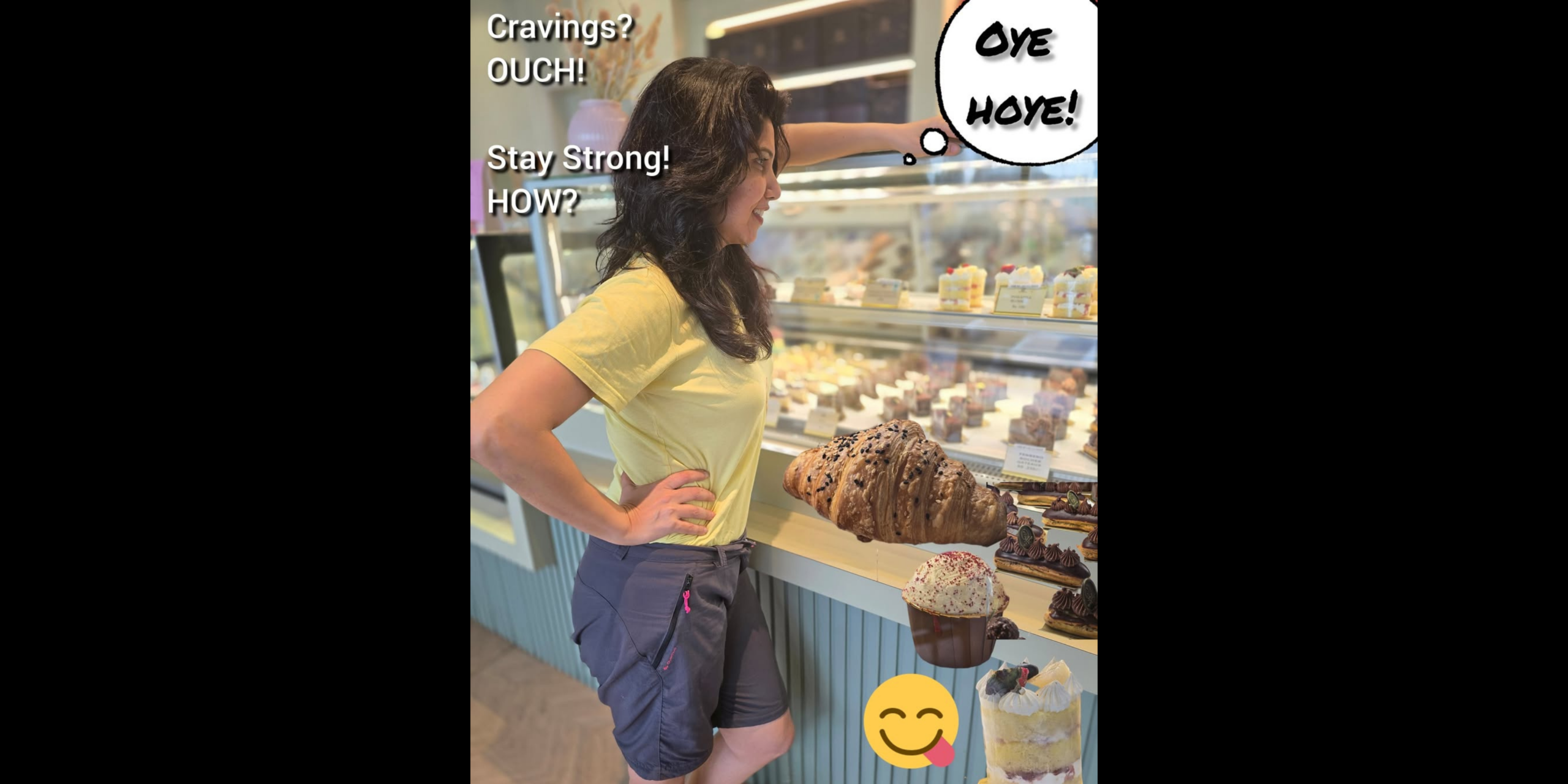
    Embarking on a weight loss transformation is one thing — but staying committed through the cravings and real-life temptations? That’s where the real journey begins. Imagine this: for the first few days, you’re unstoppable — motivated, disciplined, crushing your meal plans and workouts. But by day six or seven, your brain has a different agenda. You’re driving past a Golgappa stall 🥳, and suddenly all your willpower seems to evaporate. The smell of sweets 🍥🥮, the sight of buttery pastries 🧁 — it’s like your foodie past comes flooding back, whispering, “Just one bite!”

    In my case, I lost 10 kg — with a remarkable 13 kg fat loss and a 3 kg muscle gain — but not without battling food cravings that felt astonishingly real and powerful. Let’s dive deep into what I learned, how cravings work, and evidence-backed strategies that truly help you stay on track.


    🧠 Understanding Food Cravings: What They Really Are

    Cravings aren’t just hunger — they’re emotional and neurological reactions to food cues. Psychology research suggests that exposure to tempting sights, smells, and memories doesn’t just make you think about food — it triggers your brain’s reward system, increasing your desire for tasty food even if you’re not physically hungry. This isn’t just willpower resisting — it’s a biological impulse your brain learned over years of repeating the behavior.

    Here’s the key takeaway: cravings aren’t weaknesses — they’re learned responses that can be rewired.


    🧩 Why Food Cravings Hit So Hard After Day Three

    When you first start a fat-loss journey, motivation and novelty help you stick with the routine. But motivation is an emotional burst — it fades. Once it does, your brain starts reacting to all your old triggers: the bakery across the street, the post-meal sweet urge, remembering how good those samosas tasted.

    Cravings often aren’t physical hunger — they’re psychological cues. They’re memories. They’re emotions. And they hit hardest when your motivation pool runs low.


    🍭 My Craving Patterns: A Foodie’s Confession

    If you relate to any of these, you’re not alone:

    • I’d wake up thinking about food before brushing my teeth.
    • After a wholesome meal, I’d already be planning the next snack.
    • If the food wasn’t delicious, my mood dipped instantly.
    • Only two foods actually bothered me: Karela and Sweet Potato. The rest? Loved them all.
    • I enjoy sweet, salty, sour, and spicy equally intensely.

    So how did someone with such wide-ranging food love manage to control cravings? The answer was surprisingly simple yet profound.


    🔑 The Real Advice My Nutrition Coach Gave Me: Understand Your Cravings

    Rather than fight cravings with sheer willpower, my coach told me to study and understand them. Most cravings are not about hunger — they’re about:

    • Emotional triggers
    • Habit loops
    • Lack of satisfaction
    • Blood sugar swings

    This insight turned game-changing for me.


    🍽️ What Science Says About Managing Food Cravings

    Here’s what research and expert health advice show:

    🥤 Stay Hydrated

    Thirst is often mistaken for hunger. Drinking water can reduce cravings significantly — especially for sweet or salty snacks.

    🍽️ Eat Balanced, Nutrient-Dense Meals

    Meals rich in protein, fibre, and healthy fats keep you full longer and help stabilize blood sugar — which drastically reduces craving intensity.

    😴 Prioritize Sleep

    Sleep deprivation increases hunger hormones and reduces fullness hormones, making cravings stronger. Aim for consistent quality sleep.

    📅 Plan Your Meals

    Meal planning removes spontaneity — and spontaneity fuels cravings. Knowing what and when you’ll eat puts your brain at ease.

    🎯 Mindful Eating

    Be fully present when eating — no scrolling or TV. This helps your brain register fullness and satisfies the emotional part of cravings.


    🍖 How I Rewired My Cravings

    💪 1. Protein First

    Adding high-protein foods like eggs, Greek yoghurt, or lentils helped keep me full for hours. Protein reduces the hunger hormone ghrelin and increases satiety.

    🥦 2. Fibre Every Meal

    Fibre slows digestion and stabilizes blood sugar, keeping the craving urge away longer. Foods like veggies, oats, and beans were lifesavers.

    🧠 3. Satisfying My Sweet Tooth Smartly

    Instead of forbidding dessert entirely, I learned to balance it within meals or choose satisfying alternatives. A small piece of dark chocolate after a balanced meal often neutralized cravings without derailing progress.

    🚶 4. Distract & Delay

    When cravings hit, I took a walk, drank a glass of water, or did a distracting activity. Most cravings passed with time without eating.

    🧘 5. Know Your Triggers

    Stress, boredom, or emotional fatigue were big triggers. Once I understood why I craved, I could prepare strategies instead of reacting impulsively.


    🥗 Small Habit Shifts That Made a Big Difference

    Here’s what helped me on a day-to-day level:

    • Hydration as Habit: A glass of water before meals reduced artificial hunger pains.
    • Meal Structure: Eating consistent meals reduced the sudden desire to snack.
    • Quality Over Quantity: Rich, fulfilling meals made me feel satisfied sooner.

    🤔 The Surprising Science of “Eating Craved Foods Better”

    A study found that including small amounts of craved foods with regular meals — instead of depriving yourself — can actually lessen cravings and help with weight loss. The secret isn’t restriction — it’s consistency and smart portioning.

    That was a major mindset shift for me: you don’t have to eliminate everything you love — you just learn how to enjoy it without letting it take over your goals.


    🧠 Why Motivation Isn’t Enough — And Habits Win the Race

    Motivation is like rocket fuel — powerful but temporary. Habits are like the engine that keeps you going each day. Habit formation — eating balanced meals, planning ahead, hydrating, and keeping your environment supportive — is what helped me stay consistent even when motivation dipped.


    ✨ My Final Leaning

    Let’s be honest: cravings are real. They sneak up on you when you least expect them. But here’s the truth — cravings don’t mean failure. They are signals — and once you learn to read them, manage them, and work with them rather than fight them, your weight loss journey becomes more sustainable, joyful, and less painful.

    This transformation wasn’t just about losing kilos. It was about understanding my relationship with food — and changing it in a way that fits my life forever.


    FAQs

    1. Why do cravings feel so strong during weight loss?
    Cravings involve your brain’s reward system, not just physical hunger. That’s why they hit hard — because they’re tied to emotion and past habits.

    2. Do cravings ever fully go away?
    Not necessarily — instead, they become easier to manage as you build habits that reduce their frequency and intensity over time.

    3. Can eating certain foods help reduce cravings?
    Yes — protein, fibre, and balanced meals help stabilize blood sugar, making cravings less intense and less frequent.

    4. Should I completely avoid craved foods?
    No — strict avoidance can make cravings stronger. Occasional controlled portions within a balanced diet work better.

    5. How long does it take to manage cravings effectively?
    Craving management improves with consistency. Many people notice a big change within a few weeks of adopting mindful eating, hydration, balanced meals, and regular sleep patterns.

  • Strength Has No Age: Why Seniors Must Prioritize Muscle, Stability & True Anti-Aging

    Spend time around people above the age of 65 and you’ll hear something beautiful.

    “I walk every day for an hour.”
    “I take my grandchildren to the park.”
    “I do yoga six days a week — stretches are all I need.”
    “We’ve even started swimming!”

    Movement at any age deserves appreciation. But here is a necessary truth:

    Movement is good. Strength is essential.

    The Missing Piece in Senior Fitness

    Walking, yoga, cycling, and swimming all support cardiovascular health and flexibility.
    However, after 60, certain elements become non-negotiable:

    • Joint stability work 
    • Muscle strengthening 
    • Soft tissue conditioning 
    • Structured balance training 

    These are not optional additions. They are the foundation of aging well.

    The Real Meaning of Anti-Aging

    Anti-aging is not about creams or hiding wrinkles.
    It is about preserving muscle.

    After 40, muscle mass begins to decline. After 60, the loss accelerates (a condition known as sarcopenia).
    With declining muscle comes reduced joint support, higher fall risk, lower bone density, slower metabolism,
    and potential loss of independence.

    Strength training directly combats this decline. It improves balance, bone health, mobility, and overall longevity.
    Most importantly, it protects autonomy — the ability to live independently.

    Leading by Example at 85

    Murali Mohan Maganti, known widely as an actor, producer, politician, businessman, and philanthropist,
    continues to lift weights and focus on strengthening and joint stability at 85 years old.

    His efforts are structured, intentional, and disciplined.
    He represents something powerful: aging does not mean retreating from strength.
    It means protecting it more consciously than ever.

    Why Strength Training After 60 Is Essential

    1. Joint Protection – Strong muscles absorb stress and protect vulnerable joints.
    2. Reduced Falls & Fractures – Strength and balance training significantly lower fall risk.
    3. Stronger Bones – Resistance training stimulates bone density.
    4. Improved Posture & Confidence – Strength improves alignment and presence.
    5. Increased Longevity – Muscle mass is one of the strongest predictors of healthy lifespan.

    A Necessary Mindset Shift

    Walking maintains movement.
    Strength training preserves function.

    One supports life.
    The other protects independence.

    As we age, our fitness must become more intentional.

    Rewriting the Narrative of Aging

    If an 85-year-old can consistently show up and thrive in the gym,
    what excuse remains for the rest of us?

    Strength has no age.
    But age demands strength.

    Showing up for even one strength session this week is not about vanity.
    It is about resilience, independence, and dignity.